For years, the farm has been equipped with a photovoltaic system dedicated to the storage and processing of cereals, with the aim of reducing the environmental impact of production and minimizing its ecological footprint. This reflects a deeply rooted green approach that guides many of the company’s decisions.
In addition to renewable energy, long crop rotations are used to allow the soil to recover after cultivation. To support a circular system, digestate derived from the processing of cereal husks is reused on the farm, helping to close nutrient cycles.
Within this virtuous local model, the company continuously works to reduce waste, limit environmental impact, and restore nutrients directly to its organic fields. The primary goal is to produce healthy and nutritious food in a sustainable way, while preserving the beauty and fertility of the surrounding agro-ecosystem.
After more than twenty years of organic farming, the company has taken a further step by obtaining certification in organic and regenerative agriculture (ROC), adhering to a certification scheme based on an agroecological approach. This private standard is promoted by the ROA Association in collaboration with the Rodale Institute, one of the world’s leading research centers in soil regeneration.
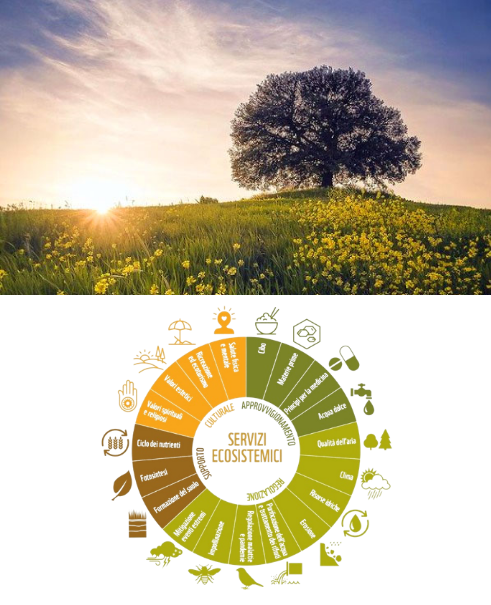
For the company, adopting practices aimed at regenerating and maintaining overall soil fertility has been a natural choice, fully aligned with its core values. Regenerative organic agriculture places the soil at the center, treating it as a living organism to be managed sustainably in order to preserve its vitality. These aspects, always considered strategic, have become even more urgent in the context of the ongoing climate crisis. A living soil is a key factor in resilience, capable of mitigating the effects of climate change while ensuring crop productivity and providing essential agroecological services for both the farm and the wider community.
For this reason, the company has chosen not only to certify itself according to the ROC standard, but also to promote regenerative agriculture within its territory, encouraging other farmers to adopt conservation practices that help restore and revitalize their soils.

Our farm has adhered to organic farming certification schemes since the early 1990s, in line with its vision of producing healthy food in a sustainable way. This approach has not only helped maintain a high level of soil fertility—thanks to extensive practices and the complete absence of synthetic fertilizers and pesticides—but has also supported and preserved the biodiversity of the agro-ecosystem.
From the outset, the farm has been considered a living organism, recognizing the importance of respecting, supporting, and maintaining all its components in a dynamic balance between production, environment, and sustainability. To this day, long crop rotations are adopted, alternating improving crops (legumes and oil-protein crops) with more demanding species such as winter cereals. To maintain and enhance soil fertility, organic fertilization is used, including animal manure and plant biomass such as green manure and crop residues. Continuous research and experimentation led, over 15 years ago, to the identification of emmer and einkorn spelt as the two most suitable cereals for organic cultivation in this specific area. These species are characterized by high resilience and tall growth, allowing them to naturally compete with weeds and adapt perfectly to our extensive farming system.
Alongside cereal production, the farm also cultivates grain legumes for human consumption, forage legumes, and oil-protein crops such as flax and sunflower. In addition, mixed forage crops are grown to ensure prolonged flowering periods, supporting wild pollinators that play a crucial role in regulating the life cycles of both cultivated and wild plant species.
For many years, our company has been Kosher certified to meet the needs of specific consumer groups. Through dedicated inspection audits, we ensure that our products comply with Jewish dietary laws (kashrut) and are therefore suitable for observant Jewish consumers.

The VEGANOK label is a quality mark that guarantees a product is vegan, meaning it contains no ingredients of animal origin and has not been tested on animals during or for its production. It is one of the most widely recognized standards in Italy and Europe, and our company has chosen to certify its products to ensure they can be safely used by vegan consumers.
Starting from 2025, the company has also obtained certification under the National Scheme within the National Sustainability Certification System, introduced by Ministerial Decree of August 7, 2024, no. 199. This system regulates access to development measures for biogas and biomethane and sets sustainability criteria for biofuels, updating previous regulations and expanding their scope. This allows the company to continue supplying husks and bran derived from cereal processing to local biogas plants for biomethane production.
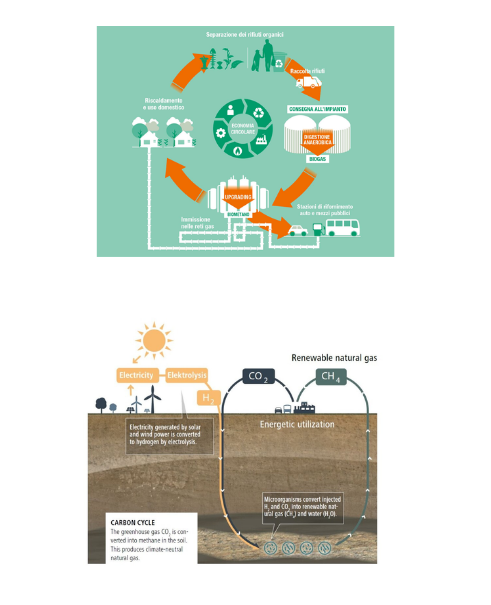
For years, in line with circular economy principles, our company has enhanced its processing by-products (such as husks and bran) by directing them to biomethane production through two local biogas plants. In addition, to close biogeochemical cycles within the farm, and in accordance with our organic fertilization plans, we use digestate (the final output of the biofuel production process) to enrich our soils with organic matter.
In this way, the company maximizes the value of all raw materials produced on the farm, contributes to the development and use of bioenergy, and reuses the final output of biomethane production (anaerobic digestion) to restore nutrients removed by crops, helping maintain overall soil fertility.
.png)