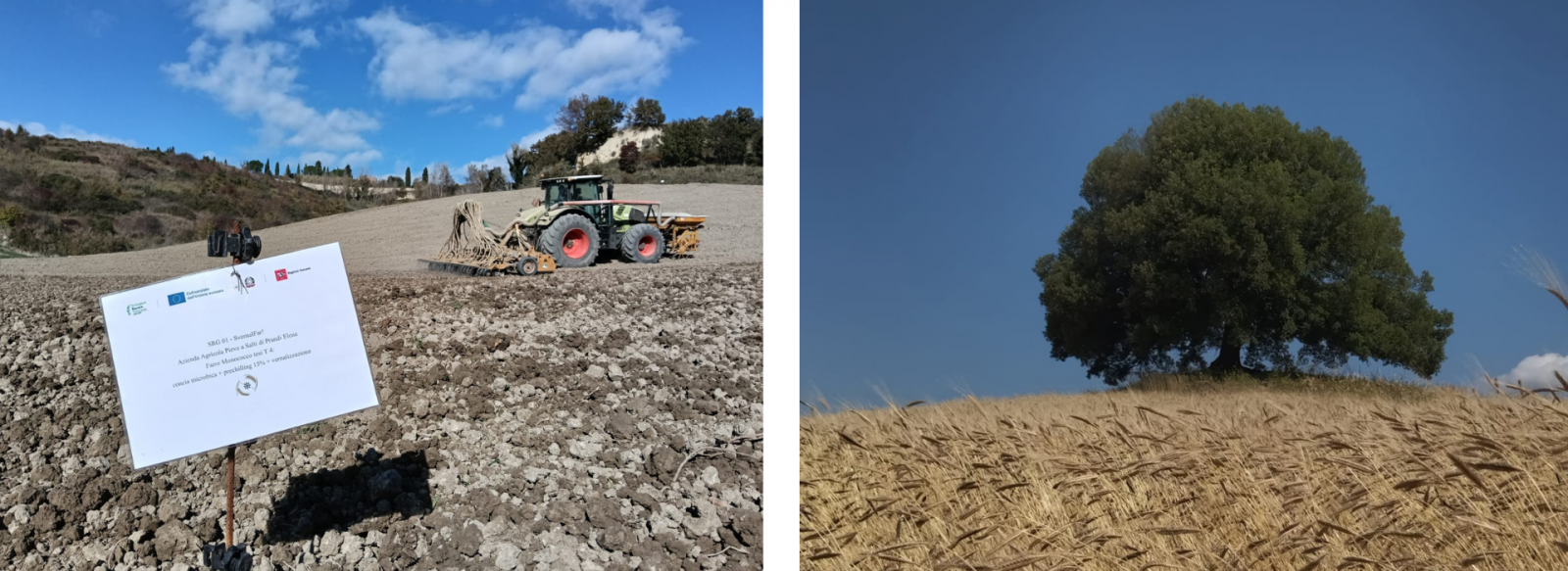
The land managed by the farm has very specific agronomic characteristics, requiring a carefully planned mechanisation strategy. This approach is essential to preserve over time the soil’s chemical, physical and microbiological fertility, ensuring the continuity of production cycles.
Clay soils, in particular, tend to alternate between two extremes: being either too wet or too dry. Over the years, we have learned how to work our land in the right way, creating a balanced interaction between human activity and the environment, with a shared goal: to produce healthy and nutritious food in an ecological way.
Long crop rotations
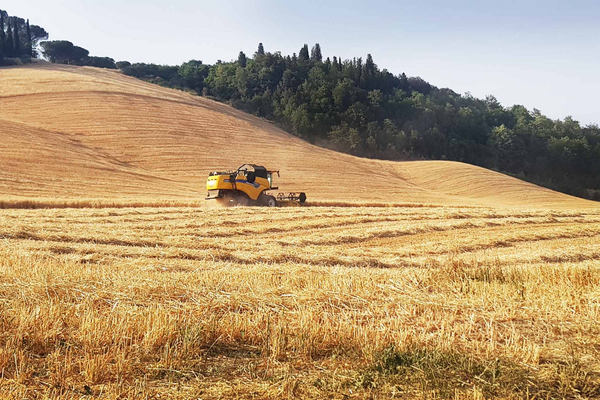
To produce healthy and nutritious food in an ecological way, we rely on long crop rotations of at least six years, allowing each field to rest properly after supporting the cultivation of ancient and minor cereals at the core of our production.
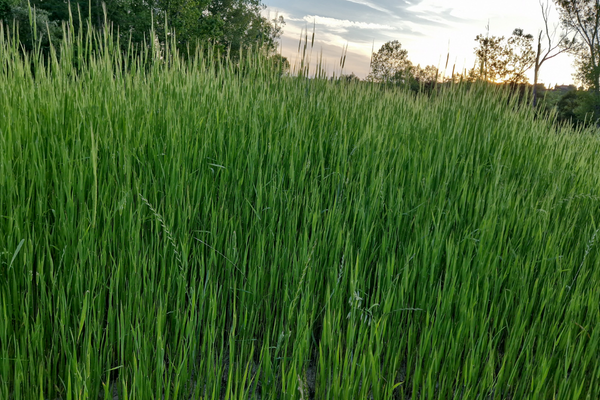
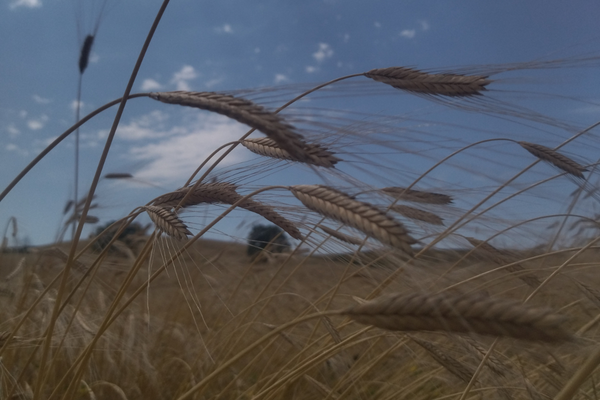
Over the past 20–25 years, we have focused on reintroducing minor cereal species characterized by strong resilience and tall growth, such as emmer and einkorn spelt, spelta wheat, white oats, and selected durum wheat varieties for pasta production.
These minor cereal species, naturally demanding in terms of nutrients, are alternated with forage legumes and grain legumes used for both food and feed chains, such as chickpeas, lentils, grass peas, beans, and black and white fava beans. Legumes are well known for their ability to fix atmospheric nitrogen through symbiosis with specific soil bacteria.
This enriches the soil with nitrogen, replenishing its reserves and improving its structure through the direct action of plant roots. Crop rotation also supports and promotes biodiversity by creating a more complex and balanced farming system.
.png)