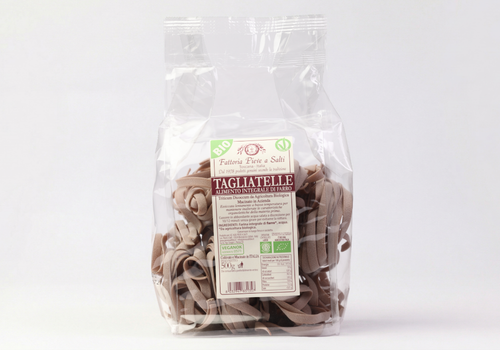
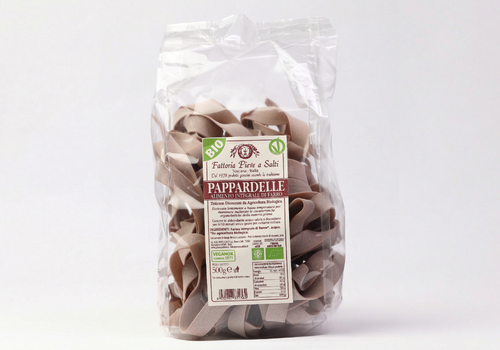
Our farm produces pasta exclusively using semolina and flours from ancient and minor cereals, in full alignment with our production choices aimed at promoting and reintroducing these species and varieties. All the raw materials are milled on-site using a traditional stone mill and then processed into pasta by an artisanal workshop located just a few kilometers from our farm.
This approach supports a virtuous circular economy among local organic farms and allows us to offer healthy, high-quality, and zero-kilometre food. In recent years, the farm has focused in particular on the production of spelt, specifically emmer (dicoccum) and einkorn (monococcum). This choice helps increase the complexity and biodiversity of crop rotations, while also providing raw materials with valuable nutritional and nutraceutical properties suited to modern dietary needs.
Ancient grains, including the two main spelt species cultivated by the farm, are characterized by their tall growth (over 1 meter), which allows them to better adapt to organic farming systems and naturally compete with weeds.
.png)